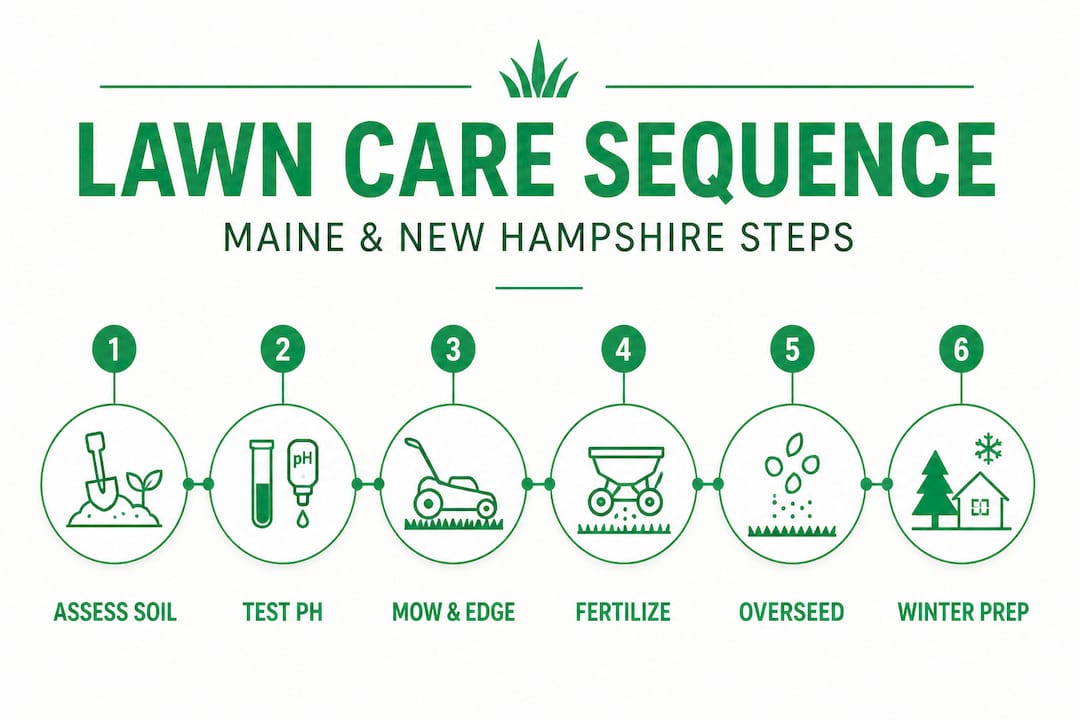
Is your lawn patchy, thin, or just refusing to look its best no matter what you try? You're not alone. Homeowners across southern Maine and New Hampshire deal with unpredictable springs, hot dry summers, and early frosts that make lawn care genuinely tricky. The good news is that with a regionally adapted routine, you can grow a healthy, attractive yard without spending every weekend outside. This guide walks you through everything from your first soil test to fall cleanup, with practical steps built specifically for New England conditions.
Table of Contents
- Assessing your lawn's needs and getting started
- Mowing: Timing, technique, and frequency for New England lawns
- Fertilizing for healthy growth: When and what to apply
- Aeration, overseeding, and dealing with soil challenges
- Seasonal cleanup, winter prep, and supporting biodiversity
- A smarter way to maintain your lawn: Local wisdom and new alternatives
- Finding expert help and the right services for your lawn
- Frequently asked questions
Key Takeaways
| Point | Details |
|---|---|
| Timing matters | Maine and New Hampshire lawns benefit from season-specific mowing and fertilization routines. |
| Adapt to soil | Rocky or shallow soils need special aeration tools and timing for best results. |
| Support pollinators | Mowing less and allowing wildflowers encourages biodiversity and healthier lawns. |
| Winter prep | Proper fall cleanup and mowing height reduces risks from snow mold and winter damage. |
| Expert help available | Local lawn care services can tackle tough tasks and enhance outdoor aesthetics. |
Assessing your lawn's needs and getting started
Now that you understand why regional conditions matter, let's start with a quick assessment and gather what you'll need.
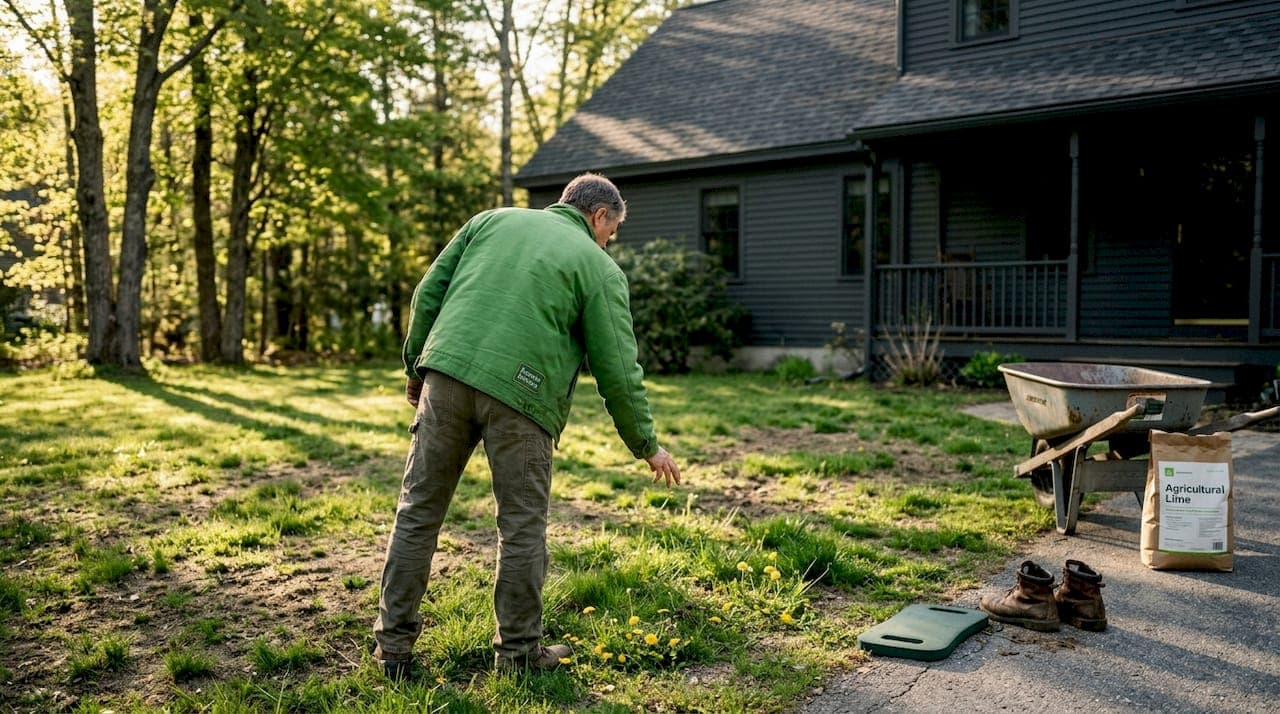
Before you buy a single bag of fertilizer or fire up the mower, take a few minutes to actually look at your lawn. Walk the yard and note where it's thin, where it's patchy, and where weeds are taking over. These patterns tell you a lot. Thin grass near the foundation usually means shade stress. Bare spots in high-traffic areas signal compacted soil. Yellowing in wet spots often points to drainage issues.
Soil type matters more than most people realize. Southern Maine and New Hampshire soils tend to be rocky, shallow, and slightly acidic, which directly affects how well grass grows and how your fertilizer performs. A simple soil test kit from your local extension office or garden center costs under $20 and tells you your pH level, nutrient deficiencies, and organic matter content. Most healthy lawns in this region prefer a pH between 6.0 and 7.0. If yours is too acidic, a lime application can fix it before you do anything else.
Grass variety also plays a big role. Cool-season grasses like Kentucky bluegrass, fine fescue, and perennial ryegrass are the right fit for this climate. They grow actively in spring and fall, slow down in summer heat, and bounce back well after cold winters. Knowing what you have helps you time every other step in this guide correctly. Check out Maine landscaping basics for more on choosing the right grass types for local conditions.
Here's a quick checklist of tools and materials you'll want on hand before you start:
- Lawn mower with adjustable height settings
- Aerator (core aerator preferred for compacted or rocky soil)
- Soil test kit or local extension service test
- Fertilizer appropriate for cool-season grasses
- Grass seed matched to your existing lawn type
- Rake for thatch removal and overseeding prep
- Garden hose or sprinkler for post-seeding watering
- Lime if your soil test shows low pH
| Task | Best timing | Frequency |
|---|---|---|
| Soil testing | Early spring or fall | Every 2 to 3 years |
| Lime application | Fall (if needed) | As soil test recommends |
| Fertilizing | Early fall, light spring | 1 to 2 times per year |
| Aeration | Early to mid-September | Once per year |
| Overseeding | Early to mid-September | As needed |
If you're looking for creative ways to use your improved lawn as a base for a full yard refresh, backyard upgrade ideas are worth exploring once your grass is healthy.
Mowing: Timing, technique, and frequency for New England lawns
With your tools ready and lawn assessed, focus on the most frequent task and how to approach it for the Maine and New Hampshire climate.
Mowing seems simple, but it's one of the most misunderstood parts of lawn care. Too short and you stress the grass, invite weeds, and dry out the soil. Too infrequent and you're cutting off more than one-third of the blade at once, which shocks the plant and slows recovery.
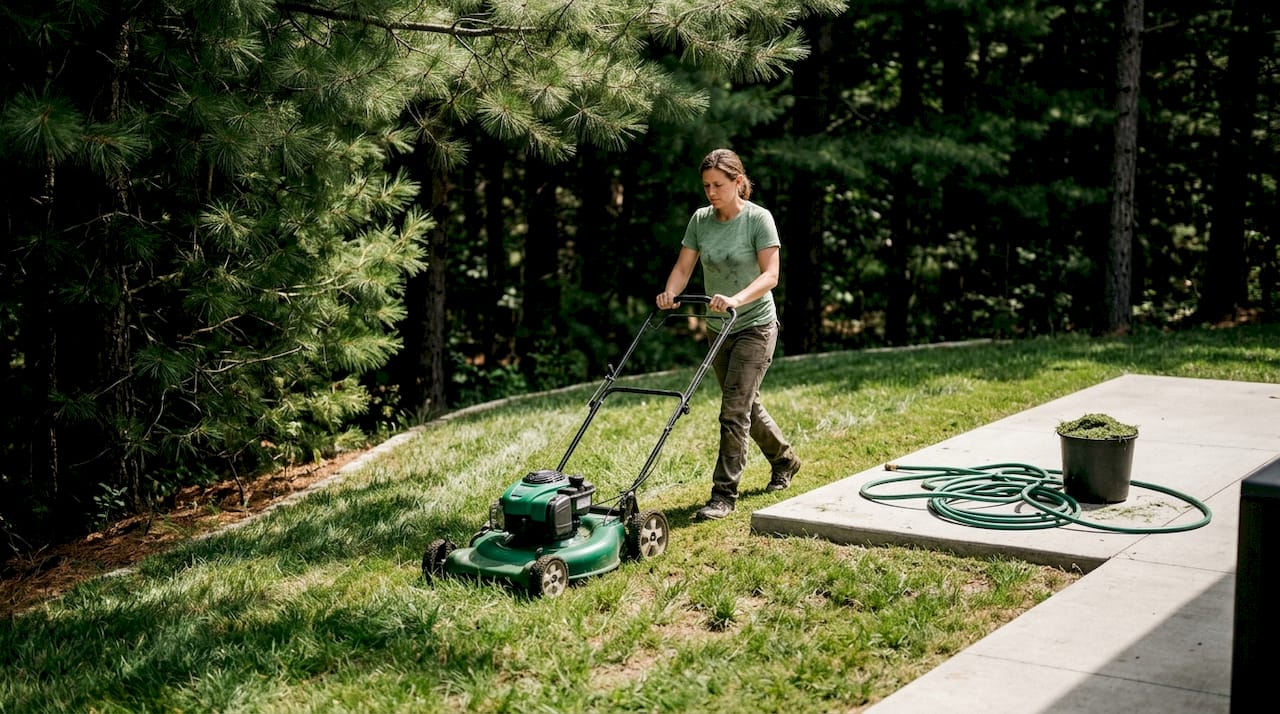
Mowing frequency should track your lawn's growth rate: weekly during active spring and early summer growth, and adjusted to every 10 to 14 days during hot or dry stretches. In New England, that means you're mowing regularly from mid-May through late June, then easing off during July heat, and picking back up in August and September as temperatures cool.
Step-by-step mowing routine:
- Set your mower blade to 3 to 3.5 inches for cool-season grasses. Never cut more than one-third of the blade height in a single session.
- Mow when the grass is dry to get a clean cut and avoid clumping.
- Alternate your mowing direction each week to prevent ruts and encourage upright growth.
- Leave clippings on the lawn when possible. They break down quickly and return nitrogen to the soil, acting like a light, free fertilizer.
- Sharpen your mower blade at least once per season. A dull blade tears grass rather than cutting it cleanly, leaving ragged edges that turn brown and invite disease.
- For the final mow of the season, gradually lower your height to about 2.5 inches to reduce snow mold risk over winter.
Here's a quick comparison of traditional mowing versus a more wildlife-friendly approach:
| Approach | Mowing frequency | Benefits | Drawbacks |
|---|---|---|---|
| Traditional manicured | Weekly or more | Neat appearance | Higher time and fuel cost |
| Wildlife-friendly | Every 2 to 3 weeks | Supports pollinators, reduces labor | Less uniform look |
| Hybrid (zones) | Mixed by area | Best of both worlds | Requires planning |
Research from UNH suggests that mowing less and reducing some fall cleanup can actively help support pollinators and biodiversity, which is great news if you'd rather spend less time behind the mower.
Pro Tip: Designate one corner or edge of your yard as a low-mow zone. Let clover, dandelions, and native flowers bloom there. Pollinators love it, and it dramatically reduces your weekly mowing time without making the whole yard look untended. You can explore lawn care treatments to complement these practices with professional support.
Fertilizing for healthy growth: When and what to apply
After establishing mowing routines, give your lawn the nutrients it needs with a regionally adapted fertilizer plan.
Fertilizing at the wrong time is one of the most common mistakes homeowners make. In New England, the instinct is to feed the lawn as soon as spring arrives, but that's usually too early. Cool soils in April and early May mean grass roots aren't actively absorbing nutrients yet, so fertilizer applied too soon often washes away or sits unused.
In New Hampshire, spring fertilizer is typically delayed until consistent soil warmth and active growth begin, usually late May. The most important feeding of the year happens in early fall, around late August to mid-September, because the growing season is short and fall feeding fuels root development that carries the lawn through winter.
Step-by-step fertilizing plan:
- Run a soil test first. This tells you exactly what nutrients your lawn is missing and prevents over-application.
- Choose a slow-release granular fertilizer with a balanced nitrogen-phosphorus-potassium ratio. Look for products labeled for cool-season grasses.
- Apply your primary fall feeding between late August and mid-September. This is the single most important application of the year.
- If you choose to fertilize in spring, wait until late May when soil temperatures are consistently above 55 degrees Fahrenheit and grass is actively growing.
- Use a broadcast spreader for even coverage. Overlapping passes slightly is better than missing strips.
- Water the lawn lightly after applying granular fertilizer to help it absorb into the soil.
Important: Avoid applying nitrogen-heavy fertilizer after mid-October. Late-season nitrogen pushes soft, leafy growth that is highly vulnerable to early frost and winter disease. This is one of the most damaging mistakes you can make for a New England lawn.
Applying fertilizer too early in spring can reduce its effectiveness by up to 30%, because cool soil biology simply isn't active enough to process and distribute the nutrients. Timing your applications correctly means every dollar you spend on fertilizer actually does its job.
For more on getting your property ready as the season winds down, the winter prep tips guide covers the full picture.
Aeration, overseeding, and dealing with soil challenges
Beyond mowing and fertilizing, tackle aeration and reseeding, especially for tough local soils or worn patches.
Aeration is the process of pulling small plugs of soil out of the ground to reduce compaction, improve drainage, and allow air, water, and nutrients to reach grass roots more effectively. For most lawns in southern Maine and New Hampshire, this is an annual task that makes a noticeable difference in how well the rest of your lawn care routine works.
"Core aeration is commonly timed to early-to-mid September across New Hampshire and paired with overseeding for best establishment, though the practical difficulty of aerating shallow rocky soils means homeowners should use heavier equipment rather than lightweight spike aerators." LawnBySeason NH
Step-by-step aeration and overseeding:
- Step 1: Mow the lawn slightly shorter than usual, around 2 to 2.5 inches, a day or two before aerating.
- Step 2: Water the lawn deeply the day before to soften the soil and make core removal easier.
- Step 3: Run the core aerator in overlapping passes across the entire lawn. Leave the soil plugs on the surface. They'll break down naturally within a few weeks.
- Step 4: Spread grass seed immediately after aerating. The open holes created by the aerator give seed excellent soil contact for germination.
- Step 5: Apply a light top-dressing of compost if you have thin or rocky areas. This adds organic matter and improves seed-to-soil contact.
- Step 6: Water daily for the first two weeks to keep the seedbed moist and support germination.
| Soil challenge | Recommended solution |
|---|---|
| Rocky or shallow soil | Use heavy-duty core aerator, not spike |
| Compacted clay soil | Aerate twice yearly, add compost |
| Sandy or fast-draining soil | Add organic matter, water more frequently |
| Heavily shaded areas | Overseed with fine fescue varieties |
For more ideas on tackling specific yard challenges, browse lawn problem solutions or read about sustainable landscaping practices that work well in this region.
Seasonal cleanup, winter prep, and supporting biodiversity
Final touches ensure your lawn stays healthy through winter and benefits the local ecosystem.
Fall and spring cleanups are not just about appearances. They directly affect how well your lawn survives winter and how quickly it recovers in spring. In New England, getting these seasonal tasks right is genuinely important.
Essential fall tasks:
- Rake leaves before they mat down and smother grass. A thick layer of wet leaves blocks light and traps moisture, creating ideal conditions for snow mold and fungal disease.
- Complete your final mowing at a slightly lower height, around 2.5 inches, to reduce disease pressure under snow.
- Apply fall fertilizer and complete any overseeding before mid-October.
- Clean and store garden tools, drain hoses, and winterize irrigation systems if you have them.
Essential spring tasks:
- Rake out any dead grass or thatch that built up over winter before new growth begins.
- Assess bare or thin spots and plan your overseeding for early fall (spring overseeding is possible but less reliable in this climate).
- Test soil pH and apply lime if needed.
- Hold off on mowing until grass reaches at least 3 inches.
"Mowing less and reducing some fall cleanup can help support pollinators and biodiversity," according to UNH research, which is worth keeping in mind as you plan your fall routine.
End-of-season mowing practices that reduce snow mold stress are especially important in northern climates where snow cover can persist for months, trapping moisture against grass crowns.
Pro Tip: Instead of raking every leaf off every inch of your yard, leave a light layer in garden beds and low-mow zones. It insulates plant roots, provides habitat for beneficial insects, and breaks down into free organic matter by spring.
For more on where lawn care is heading in 2026, check out low-maintenance lawn trends that are gaining real traction in this area.
A smarter way to maintain your lawn: Local wisdom and new alternatives
Here's an opinion that might surprise you: the perfectly manicured, edge-to-edge green lawn is becoming less relevant for homeowners in southern Maine and New Hampshire. Not because people don't care about their yards, but because they're discovering that fighting against local conditions is exhausting, expensive, and often unnecessary.
The most successful lawns we see in this region belong to homeowners who have stopped trying to replicate a golf course and started working with what they have. Rocky soil? Stop fighting it and build raised planting areas at the edges. Shady corner that never grows grass well? Convert it to a mulched bed with native shrubs. Wet low spot? Plant it with moisture-tolerant ground cover instead of reseeding it every year.
Rethinking lawn care through a sustainable lens doesn't mean letting your yard go wild. It means being strategic about where you invest your time and money. Divide your yard into zones: a high-maintenance area near the front or entertaining space that you keep looking sharp, and lower-maintenance zones elsewhere that you mow less frequently and manage with less intervention.
This approach actually saves most homeowners significant time and money each season, while often producing a yard that looks more intentional and interesting than a uniform carpet of grass. It also supports local pollinators, reduces chemical inputs, and builds healthier soil over time.
Pro Tip: Split your yard into two clear zones this season. Keep the area closest to your home and street looking well-maintained. Let the back edges or less-visible areas go a bit wilder. You'll cut your mowing time noticeably and your yard will still look great from the curb.
Finding expert help and the right services for your lawn
If your lawn needs more than personal care, or you want time-saving solutions, there's expert help nearby.
Even with the best DIY routine, some lawn challenges are bigger than one person can tackle on a weekend. Severely compacted soil, widespread bare patches, persistent weeds, or a yard that's been neglected for years often need professional attention to get back on track. That's where local expertise makes a real difference.

At Exterior Etcetera, we specialize in local lawn care treatments tailored to the specific conditions of South Berwick, Dover, Eliot, Rollinsford, and surrounding communities. We understand the soil, the climate, and the timing that makes lawn care work here. Whether you need a full seasonal cleanup, aeration and overseeding, or ongoing maintenance, our team handles it with the same attention to detail we bring to every property. Visit our local landscaping services page to request a free estimate, or check out our lawn care FAQs for quick answers to common questions.
Frequently asked questions
How often should I mow my lawn in New Hampshire?
During active growth periods in spring and early summer, mow weekly to match your lawn's growth rate. During hot or dry stretches, reduce to every 10 to 14 days or wait until grass reaches 3 inches.
What is the best time to fertilize my lawn in Maine?
Your most important feeding should happen in early to mid-September. Spring fertilizer should be delayed until late May when soil is consistently warm and grass is actively growing.
How can I support pollinators with my lawn?
Allow patches of clover and dandelions to bloom by mowing less frequently in designated zones. Mowing less and reducing fall cleanup creates valuable habitat for pollinators and beneficial insects.
What's the best aeration method for rocky soils?
Use a pull-behind or heavy-duty core aerator rather than a spike aerator. Core aerators remove plugs of soil and work far better in the shallow, rocky conditions common across southern Maine and New Hampshire.
Should I mow shorter right before winter?
Yes. Gradually lower your mowing height for the last one or two mows of the season to around 2.5 inches. This reduces snow mold risk, which is a real concern in northern climates where snow sits on grass for extended periods.
Recommended
- Landscaping Services Near Me | Powerwash In South Berwick, ME
- Lawn Care And Landscaping | Lawn Care Treatment In ME — Exterior Etcetera, LLC
- Preparing Your Property for Winter in the Seacoast Area: A Complete Homeowner's Guide — Exterior Etcetera, LLC
- Outdoor Fire Pits and Kitchens: Why Fall is the Perfect Time to Build — Exterior Etcetera, LLC