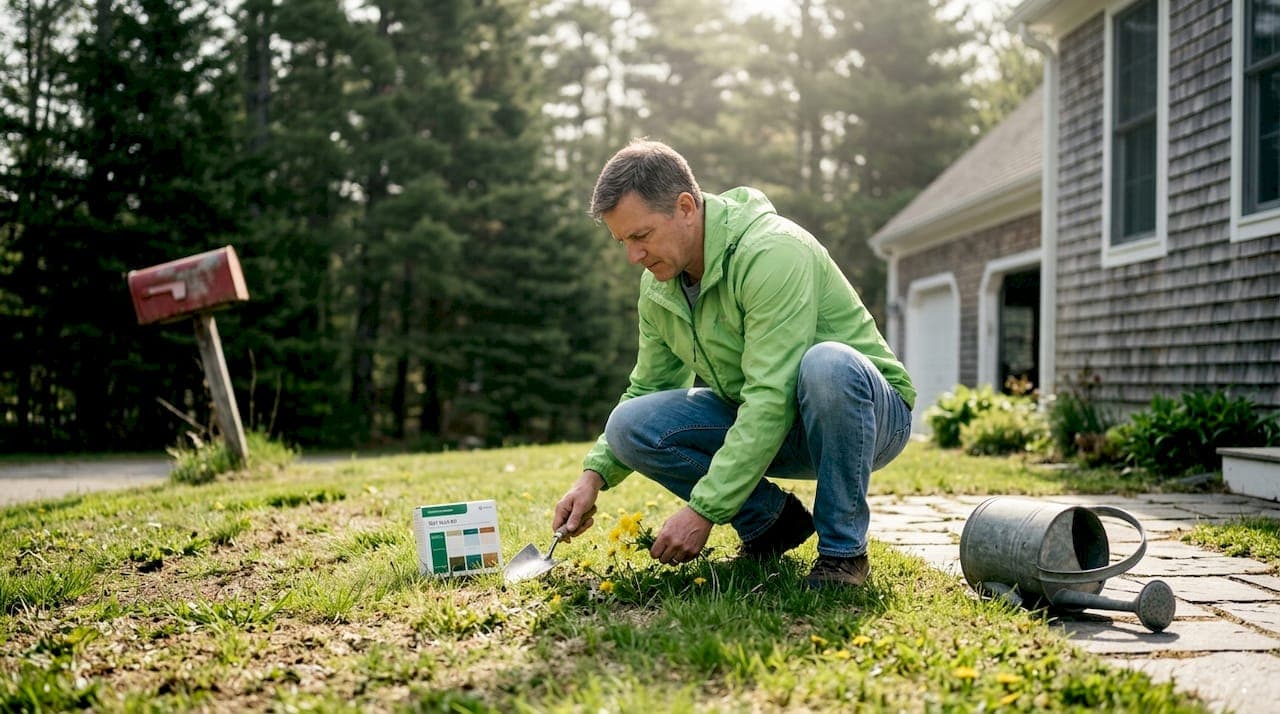
You've done everything the bag says. You've fertilized, watered, and mowed. But your lawn still looks patchy, weedy, and worn out by July. Sound familiar? The problem isn't effort. It's timing. Lawns in southern Maine and New Hampshire don't follow the same rules as the rest of the country, and the generic advice you find online can actually make things worse. This guide breaks down exactly what to do, when to do it, and why it works for your specific region, so you can stop guessing and start seeing real results.
Table of Contents
- Know your lawn: Understanding grass types and soil
- Spring reset: What to do and when
- Summer stress: Maintenance through heat and drought
- Fall focus: Repair, feed, and seed for lasting results
- Winter tactics: Protecting your dormant lawn
- Expert perspective: Why timing matters more than products
- Make seasonal lawn care effortless with professional help
- Frequently asked questions
Key Takeaways
| Point | Details |
|---|---|
| Know your soil and grass | Success starts by matching care to your specific lawn type and local soil conditions. |
| Timing trumps products | Season-specific actions done at the right time produce far better results than any store-bought fix. |
| Fall is the power season | Most of your lawn’s health and thickness is determined by what you do in September and October. |
| Don’t skip soil tests | Annual testing avoids wasting money and ensures amendments actually improve your lawn. |
| Professional help pays off | Lawn care pros have region-specific knowledge and tools to guarantee lush growth and curb appeal year-round. |
Know your lawn: Understanding grass types and soil
Before jumping into the seasonal to-do list, you need to know what you're working with and why local lawns are different from the national advice you'll find online.
Most lawns in southern Maine and New Hampshire are cool-season grasses. According to regional lawn research, the most common types here are Kentucky Bluegrass, Fine Fescue, and Perennial Ryegrass, with Tall Fescue only viable in warmer southern or coastal areas. That distinction matters because each grass type has different mowing heights, watering needs, and fertilizer schedules.
The soil here adds another layer of complexity. Southern Maine and New Hampshire soils tend to be acidic, shallow, and rocky, with pH levels often ranging from 4.8 to 6.0. That level of acidity can lock up nutrients in the soil, meaning your fertilizer won't absorb properly even if you apply it correctly. Knowing your soil type before you spend money on amendments is essential.
Here's a quick breakdown of how grass type matches up with common local conditions:
| Location type | Likely grass type | Soil challenge |
|---|---|---|
| Coastal/southern edge | Tall Fescue, Ryegrass | Sandy, lower acidity |
| Inland neighborhoods | Fine Fescue, Bluegrass | Rocky, highly acidic |
| Shaded yards | Fine Fescue | Shallow, compacted |
| Full sun suburban lots | Kentucky Bluegrass | Moderate depth, acidic |
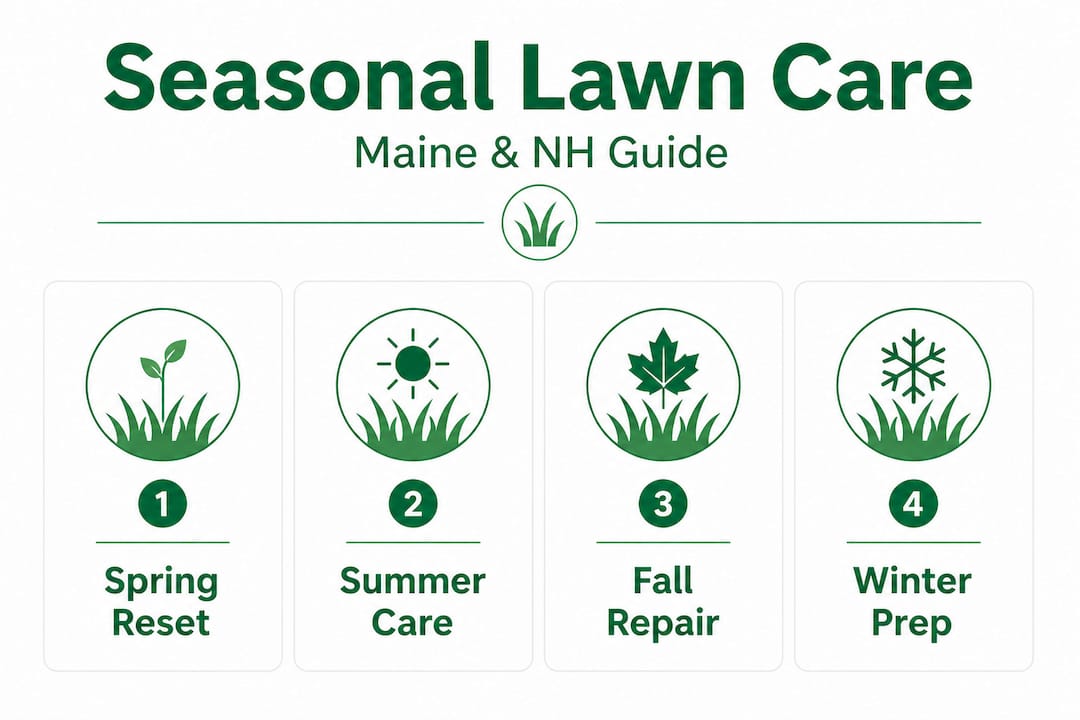
Understanding your grass type also helps you increase home value with lawn care more effectively, since a healthy, species-appropriate lawn is far more attractive and resilient than one that's been forced into the wrong conditions.
Key things to identify about your lawn before the season starts:
- Grass type: Look at blade width, color, and texture. Fine Fescue is narrow and wispy. Kentucky Bluegrass has a distinctive boat-shaped tip. Ryegrass is shiny and coarse.
- Soil depth: Dig a small hole. If you hit rock or dense clay within 4 to 6 inches, your lawn will struggle to hold moisture.
- Sun exposure: Shaded areas need different care than full-sun sections, even within the same yard.
- Drainage patterns: Low spots that stay wet after rain are prone to fungal disease and compaction.
Pro Tip: Get a soil test through UMaine Cooperative Extension or UNH Extension before you do anything else. It costs around $15 to $20 and tells you exactly what your soil needs. Skipping this step is like trying to fix a car without looking under the hood.
Spring reset: What to do and when
Once you know your grass and soil, it's time to act on spring's crucial windows to give your lawn a head start.
Spring in this region is unpredictable. A warm week in April can be followed by a hard frost in early May. That's why the biggest mistake homeowners make is starting too early. Walking on wet, frost-softened soil compacts it, and applying pre-emergent herbicide at the wrong time either misses the weed window entirely or damages emerging grass.
Here's the right order of operations for spring lawn care in southern Maine and New Hampshire:
- Light raking and debris removal (early to mid-April): Clear out matted leaves, sticks, and dead grass clumps. Don't rake aggressively or you'll pull up grass roots that are still fragile from winter.
- Soil test (April, if you didn't do it in fall): Submit samples to UMaine or UNH Extension for a full pH and nutrient profile.
- Pre-emergent herbicide (when soil reaches 50 to 55°F): This is the critical window. Soil temperature timing means late April along the Seacoast and early to mid-May further inland. A calendar date won't tell you this. A soil thermometer will.
- First mow (when grass is actively growing and soil is dry): Set your blade to 3 to 3.5 inches. Never mow wet grass or frozen ground.
- Slow-release fertilizer (mid to late May): Wait until you see consistent, visible growth before applying. Feeding dormant grass wastes product and can burn emerging roots.
"Avoid early work on wet or frozen soil to prevent compaction and frost heave damage. Spring care in this region is about patience and precision, not enthusiasm." This is especially true for inland properties where the ground stays frozen longer than coastal areas.
Pro Tip: Track local soil temperature using the NOAA website or a basic soil thermometer from a garden center. Seacoast areas like Dover, NH, and Eliot, ME, warm up one to two weeks earlier than inland spots. Don't treat your whole yard on the same schedule as someone in Portsmouth.
Pair your spring reset with smart winter prep tips from the previous season, and you'll start spring already one step ahead.
Summer stress: Maintenance through heat and drought
With spring care behind you, here's how summer strategy keeps your lawn thriving without constant watering or mowing.
Cool-season grasses like Kentucky Bluegrass and Fine Fescue are not built for heat. When temperatures consistently hit the 80s and 90s, these grasses slow down and sometimes go dormant. That's completely normal. The goal in summer is not to push growth. It's to protect what you've built.
Follow this weekly summer maintenance routine:
- Mow weekly at 3 inches. Never remove more than one-third of the blade height in a single cut. Cutting too short stresses the grass and exposes soil to sun, which dries it out faster and invites weeds.
- Water deeply but infrequently. Aim for one inch per week if rainfall is low. Use a rain gauge to track what nature provides. Deep watering trains roots to grow downward, making your lawn more drought-resistant over time.
- Hold off on nitrogen fertilizer through June and July. Pushing growth during heat stress weakens the plant. Wait until late August if you need to apply anything.
Here's a simple summer lawn checklist to keep handy:
| Task | Frequency | Notes |
|---|---|---|
| Mowing | Weekly | Keep blade at 3 inches |
| Watering | 1 to 2 times per week | Deep soaks, not light sprinkles |
| Weed spot treatment | As needed | Target before they go to seed |
| Mower blade check | Monthly | Dull blades tear grass, inviting disease |
| Lawn inspection | Weekly | Look for drought stress or pest damage |
Signs your lawn is under drought stress:
- Footprints stay visible after walking across the lawn. Healthy grass springs back quickly.
- Blades curl or fold lengthwise, trying to conserve moisture.
- Color shifts from green to blue-gray before turning tan or beige.
If your lawn goes dormant and turns beige during a dry stretch, don't panic. Most cool-season grasses can stay dormant for four to six weeks without dying, as long as they get at least a half inch of water every two to three weeks to keep the crowns alive.
Pro Tip: Raise your mower blade by half an inch during heat waves. Taller grass shades the soil, keeps roots cooler, and reduces water evaporation. It's one of the easiest adjustments you can make with a big payoff.
For more ideas on making your outdoor space look great through the warmer months, check out these backyard improvements for summer that pair well with a healthy lawn.
Fall focus: Repair, feed, and seed for lasting results
After surviving summer, fall's short window is where lasting improvements are made. Here's how to maximize it.
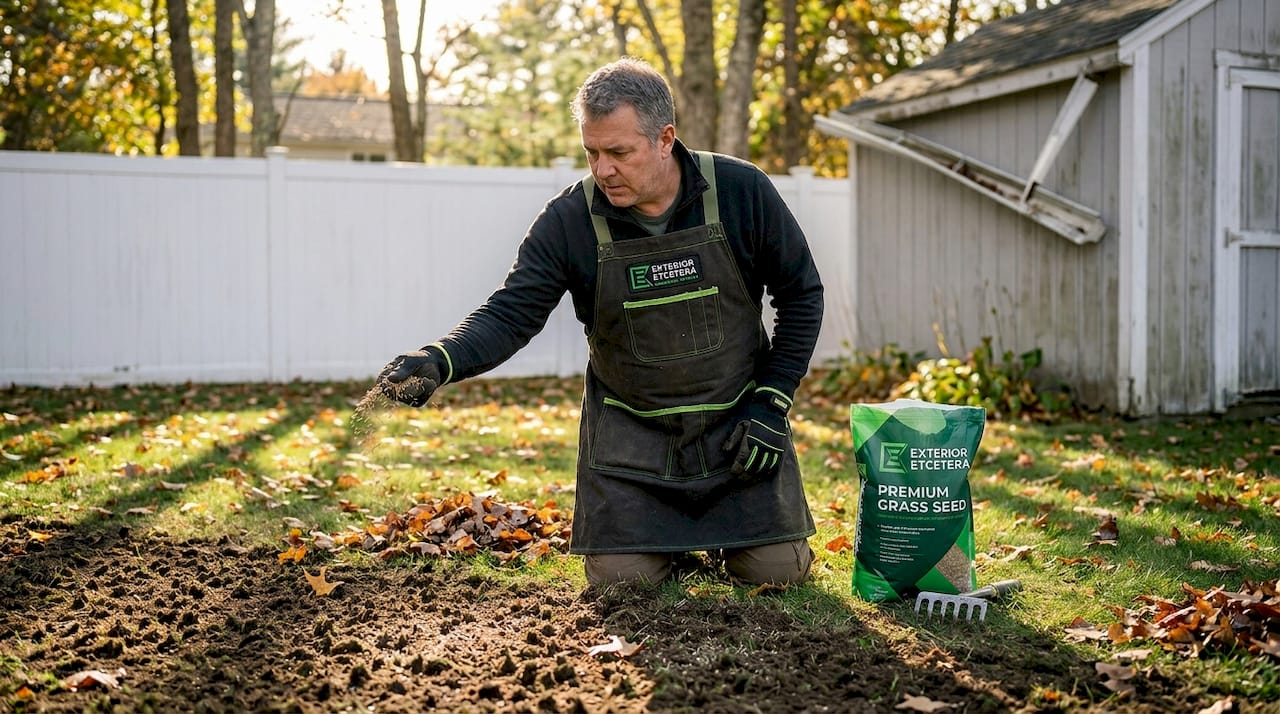
Fall is, without question, the most important season for cool-season lawns in this region. Soil is still warm, air temperatures are cooler, and grass roots are actively growing. This combination makes fall the ideal time to fix thin spots, reduce compaction, and load up on nutrients before the ground freezes.
Here's your fall action plan in order:
- Core aerate in early September. Core aeration pulls small plugs of soil out of the ground, reducing compaction and allowing water, air, and nutrients to reach the root zone. This is especially important on rocky or clay-heavy soils common in this region.
- Overseed immediately after aeration. Overseeding timing varies slightly by location: mid-September for Lakes Region and foothills, early October for Seacoast areas. Seed dropped into aeration holes has direct soil contact, which dramatically improves germination rates.
- Apply your primary fertilizer in September. Use one pound of nitrogen per 1,000 square feet. This feeds root development without pushing excessive top growth before winter.
- Apply a winterizer fertilizer in early to mid-October. This low-nitrogen, high-potassium formula strengthens cell walls and helps grass store energy for spring green-up.
What happens if you skip fall care?
- Thin, weak turf going into winter is far more vulnerable to snow mold and winter kill.
- Compacted soil stays compacted, reducing spring growth and water absorption.
- Weeds fill in bare spots faster than grass can recover in spring.
- You lose the best seeding window of the entire year.
Fall fertilization fuels root growth that continues even after the grass stops growing above ground. Those stored nutrients are what power your lawn's first burst of green in spring.
Pro Tip: Overseed immediately after core aeration, not days later. The open holes give seed direct contact with soil, and that contact is what drives germination. Waiting even a few days allows the holes to close back up.
Pair your fall lawn work with eco-friendly fall lawn tactics that reduce chemical use while still delivering strong results.
Winter tactics: Protecting your dormant lawn
Before the snow flies, there are a few final, often-overlooked lawn care moves that pay off big when spring returns.
Winter lawn care in southern Maine and New Hampshire isn't about doing a lot. It's about doing a few things right so your lawn comes back strong in April.
Here's what matters most before dormancy sets in:
- Final mow at 2 to 2.5 inches. This is shorter than your summer height. Cutting lower before dormancy reduces the risk of snow mold, a fungal disease that thrives under matted, long grass covered by snow. Aim for late November along the Seacoast and early November further north.
- Remove all leaves and debris. Leaf mats block light, trap moisture, and create the perfect environment for fungal disease. Even a thin layer of leaves can cause dead spots by spring.
- Stay off snow-covered grass. Walking on frozen or snow-covered turf compacts the crowns of the grass plants and creates channels for disease. If you need to cross the yard, use a path or stepping stones.
- Run a soil test and apply lime if needed. Fall and early winter are ideal times to apply lime to raise your soil pH. It takes months to work, so applying it now means it's ready for spring.
"Removing leaves before the first snow and keeping foot traffic off dormant grass are two of the simplest winter lawn care steps, and two of the most commonly skipped."
For a full breakdown of how to get your property ready before the cold arrives, the guide on preparing lawns for winter covers everything from lawn prep to gutter cleaning and beyond.
Expert perspective: Why timing matters more than products
Here's what really separates thriving local lawns from the rest, and it's often overlooked in mainstream advice.
Most homeowners spend a lot of energy comparing fertilizer brands, weed killers, and grass seed blends. That's understandable. The marketing is compelling. But after working with lawns across South Berwick, Dover, Eliot, and Rollinsford, the honest truth is this: the brand matters far less than the week you apply it.
The short growing season in this region, roughly mid-April through October in southern areas and even shorter further north, means there is very little margin for error. Apply pre-emergent two weeks late and crabgrass wins. Overseed in late October instead of mid-September and the seed never establishes before frost. These aren't small mistakes. They cost you an entire season.
Soil testing is the other piece that homeowners consistently skip. UMaine Cooperative Extension recommends testing before any amendment program. Without knowing your pH and nutrient levels, you're guessing. And guessing on acidic, rocky New England soils usually means wasted money and mediocre results.
The most successful lawns we've seen don't follow the bag instructions blindly. They follow the soil and the weather. They test first. They time applications to actual soil temperature, not the calendar. And when a property has steep rocky slopes, large square footage, or persistent problem areas, they bring in professionals who have the right equipment and local knowledge to get consistent results.
Embracing sustainable, time-based approaches also means you're working with your lawn's natural cycles rather than against them. That's where the real gains happen.
Make seasonal lawn care effortless with professional help
If you want professional results without the guesswork and hassle, here's an easy way to get started.
Keeping up with every seasonal window, soil test, and application timing is genuinely rewarding when you have the time and tools. But for many homeowners in South Berwick, Dover, Eliot, and surrounding communities, the schedule is already packed. That's exactly where Exterior Etcetera comes in.

Our team handles the timing, the heavy lifting, and the local knowledge so you don't have to. From spring soil prep and pre-emergent applications to fall aeration, overseeding, and winterizer treatments, we build customized seasonal programs around your specific yard, soil type, and budget. Explore our lawn care treatments to see what's included, or visit Exterior Etcetera to request a free estimate and get started with a plan built for your property.
Frequently asked questions
What type of grass grows best in southern Maine and New Hampshire?
Kentucky Bluegrass, Fine Fescue, and Perennial Ryegrass are best suited for this region, with Tall Fescue only appropriate in warmer coastal areas of southern Maine and New Hampshire.
When should I fertilize my lawn in New Hampshire or southern Maine?
Your primary fertilizer should go down in September at one pound of nitrogen per 1,000 square feet, followed by a winterizer application in early to mid-October for the strongest root development.
How can I prevent summer drought damage to my lawn?
Water deeply and infrequently, providing about one inch per week during dry stretches, and keep your mower blade raised to three inches or higher to shade the soil and slow moisture loss.
Is core aeration really necessary every year?
Core aeration is strongly recommended each fall, especially on compacted or rocky soils common in this region, and it dramatically improves overseeding success when done on the same day.
Should I rake leaves off the lawn before winter?
Yes, always remove leaves before the first snow. Leaf mats trap moisture and create ideal conditions for snow mold, which causes dead patches that are slow to recover in spring.
Recommended
- Lawn Care And Landscaping | Lawn Care Treatment In ME — Exterior Etcetera, LLC
- Preparing Your Property for Winter in the Seacoast Area: A Complete Homeowner's Guide — Exterior Etcetera, LLC
- Landscaping Services Near Me | Powerwash In South Berwick, ME
- Outdoor Fire Pits and Kitchens: Why Fall is the Perfect Time to Build — Exterior Etcetera, LLC